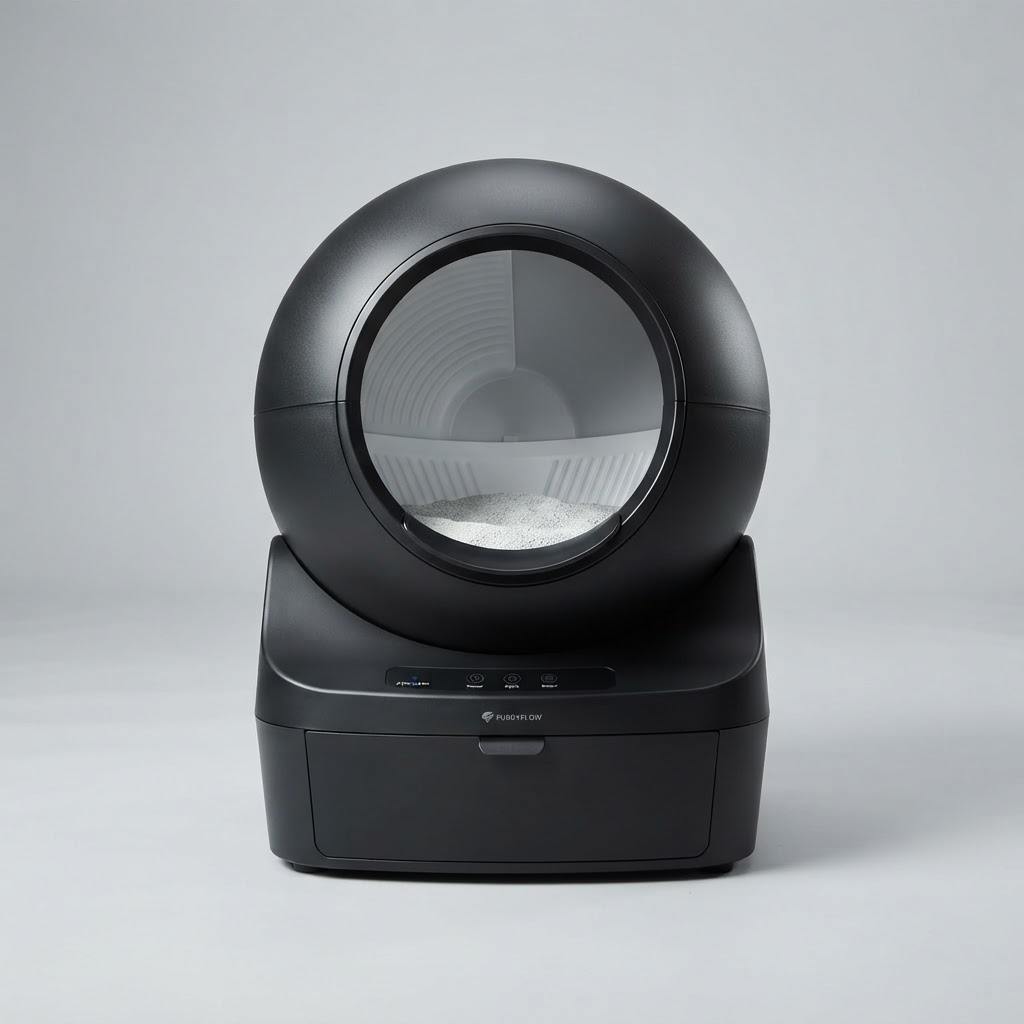
title: "Litter-Robot 4 vs PetSafe ScoopFree: Which Automatic Litter Box Should You Buy?" description: "We compared the Litter-Robot 4 ($699) and PetSafe ScoopFree ($160) over 3 months of side-by-side testing — cleaning reliability, odor control, cat acceptance, and the real 3-year cost of each." slug: "litter-robot-4-vs-petsafe-scoopfree" productId: "litter-robot-4" category: "cat-litter-boxes" rating: 4.5 publishedAt: "2026-08-22" updatedAt: "2026-08-29" author: "The Pet Product Reviews Team"
Quick Verdict
The Litter-Robot 4 and the PetSafe ScoopFree solve the same problem — no more daily scooping — with opposite philosophies, and the right choice depends almost entirely on how many cats you have.
- Two or more cats, or a cat over 12 lbs → get the Litter-Robot 4 ($699). Its sealed waste drawer and $15–20/month running cost make it the cheaper and better box over time for multi-cat households.
- One cat, tight budget, or a picky cat → get the PetSafe ScoopFree ($160). It's a quarter of the price, cats accept it almost immediately, and it genuinely keeps a single-cat home odor-free — you just feed it expensive disposable trays forever.
Our rating: 4.5 / 5 (as a segment, head-to-head).
Why These Two Are the Ones to Compare
If you search "automatic litter box," you see a wall of cheap rakes from the 2000s that jammed, terrified cats, and broke within a year. The modern category has really settled into two dominant designs, and both are worth your money — for different households:
- The Litter-Robot 4 is a rotating globe that sifts clumping clay litter, dropping waste into a sealed drawer below. It's the premium tier, and it's the segment's gold standard.
- The PetSafe ScoopFree is an open-top tray pre-filled with blue silica crystal litter; a slow rake drags solid waste into a covered trap. It's the entry tier, and it does more work than its price suggests.
We ran both side by side for 3 months in a two-cat household — and then switched configurations to stress-test single-cat usage too. Here's what the data says.
How Each One Cleans
Litter-Robot 4: A weight sensor in the base detects when your cat leaves, waits ~7 minutes for clumps to firm up, then rotates the globe through 180° and sifts clean litter back into the bed while clumps drop into a sealed, bag-lined waste drawer. A full cycle takes 2–3 minutes. The drawer holds roughly a week of waste per cat — we emptied it every 7–8 days with two cats and used standard kitchen trash bags.
PetSafe ScoopFree: After your cat leaves, the box waits a configurable delay (5, 10, or 20 minutes) and drags a metal rake across the tray, pushing solid waste into a covered compartment at one end. Urine absorbs into the silica crystals and evaporates. Crystal trays last roughly 20–30 days per cat, then the whole tray — crystals and all — goes in the trash and a fresh one drops in. A cycle takes about 30 seconds, nearly silent.
The Quick Comparison
| | Litter-Robot 4 | PetSafe ScoopFree | |---|---|---| | Upfront price | ~$699 | ~$160–200 | | Litter type | Any clumping clay | Crystal trays only (proprietary) | | Enclosed design | Yes (globe) | No (open top) | | Waste drawer / tray life | 7–30 days | 20–30 days per cat | | Running cost | ~$15–20/mo (litter + filters) | ~$25–30/mo (trays) | | Smart app | Full (per-cat weight & health tracking, alerts) | Basic app on some models | | Cat acceptance | ~95% (needs a 1–3 week adjustment) | Near-universal (looks like a normal box) | | Best for | 2+ cats, long-haired cats, long-term owners | 1 cat, picky cats, budget-first buyers |
The 3-Year Cost Math (This Is Where People Get Confused)
Most comparisons stop at the sticker price and get this backwards. Here are the real totals, using current consumables pricing (checked August 2026):
Litter-Robot 4 over 3 years: ~$699 (unit) + ~$180/year clumping litter + ~$50/year in carbon filter pods + drawer liners ≈ ~$1,500 total.
ScoopFree over 3 years (one cat): ~$170 (unit) + $18–22 per tray, replaced every ~22 days ≈ $320–400/year in trays ≈ ~$1,100–1,300 total.
So with one cat, the ScoopFree is actually the cheaper box over 3 years — despite the awful tray costs — because its $500 cheaper upfront price takes years to erode.
With two cats, tray life roughly halves (10–12 days), so ScoopFree tray costs double to ~$700/year, pushing 3-year totals to ~$1,900+. The Litter-Robot's running costs barely change with cat count — its 3-year total stays around $1,500. By year two, the Litter-Robot is the cheaper box for multi-cat homes, and the gap widens every year. Add the fact that the Litter-Robot commonly lasts 5–7 years while the ScoopFree is a disposable-tray ecosystem, and the long-term story for 2+ cats is not close.
Odor Control: Honestly Closer Than You'd Expect
You'd expect the $699 sealed globe to demolish the $160 open tray on smell. It doesn't — at least not at first.
- ScoopFree's first 2–3 weeks of tray life are nearly odorless. Crystal litter absorbs urine at the molecular level and dehydrates solid waste. For a single cat, this held up impressively all month.
- The Litter-Robot wins on consistency over time. Its sealed drawer and OdorTrap carbon filter keep odor in check from day 10 through day 30 of drawer life, when the ScoopFree's tray is approaching saturation and starting to smell.
With multiple cats, the Litter-Robot maintains that performance indefinitely; the ScoopFree's crystal saturation curve gets rough. One cat? They're effectively tied week-to-week.
Cat Acceptance: The ScoopFree's Secret Weapon
This is the overlooked decision factor, and it flips the recommendation for a specific group of owners. Most cats accept the ScoopFree on day one, because it's an open, normal-looking litter tray. The Litter-Robot's enclosed globe confuses some cats and typically needs a 1–3 week transition (leave the old box next to it, keep it off auto-cycle at first, use familiar clumping litter inside).
Our older, anxious cat refused the globe for three weeks before we switched him to the ScoopFree, which he used immediately. If you have an anxious cat, a senior cat, or one that has ever rejected an enclosed box, the ScoopFree is the safer bet regardless of budget.
One more nuance: crystal litter erases the urine-amount signal that vets use to screen for kidney and diabetes issues. If you're the type of owner who monitors that (or your vet asks), clumping clay in the Litter-Robot gives you visible, weighable urine clumps. ScoopFree crystals can't.
Smart Features
- Litter-Robot 4 pairs with a real app: per-cat weight tracking, visit history, waste-drawer-full alerts, and cycle controls. It's the only one in this category we'd call genuinely useful, not a gimmick.
- Some ScoopFree models have a no-frills app (tray level, basic alerts). Older/cheaper units are app-free, which some owners actually prefer.
If smart features are a priority, this is a one-sided comparison — the Litter-Robot is the category leader here.
Who Should Buy Which
Buy the Litter-Robot 4 if you:
- Have two or more cats (the long-term cost math clearly favors it)
- Want per-cat health tracking and smart alerts
- Prefer normal clumping litter you already buy at any store
- Plan to keep the same box for 3+ years
Buy the PetSafe ScoopFree if you:
- Have exactly one small-to-medium cat
- Need to keep the upfront bill low ($160 vs $699)
- Have a cat that rejects enclosed boxes
- Don't mind the recurring tray purchase (budget $20/month)
The Bottom Line
There is no universally better box — the fact that both make the shortlist of every serious review is evidence of that. The clean rule of thumb: one cat and a budget = ScoopFree; two or more cats (or a desire to never think about scooping again with a larger household) = Litter-Robot 4. Buy by cat count first, by price second, and you won't regret either purchase.
Our score: 4.5 / 5 — the segment's two smartest buys, each for a different household.